5.6 - Recovery Cylinders
Module: Recovery Recycling Reclaiming Evacuation and Dehydration
Regulatory verification date: August 9, 2026
Primary authority: Current EPA Section 608 test-topic guidance and U.S. Department of Transportation / PHMSA hazardous-material cylinder requirements
Course role: Explains how refillable recovery cylinders are identified, filled by weight, inspected, requalified, transported, and protected from refrigerant cross-contamination
Learning Objectives
After completing this section, a student should be able to:
- Distinguish a refillable recovery cylinder from a disposable refrigerant cylinder and explain why a disposable cylinder must never be refilled or used for recovery.
- Identify the liquid and vapor ports on a typical recovery cylinder and explain the function of the internal dip tube.
- Determine the maximum allowable refrigerant weight and remaining available capacity using the cylinder’s tare weight and water-capacity markings.
- Explain the purpose of weighing and overfill protection and the hazard associated with filling a recovery cylinder too full.
- Inspect cylinder condition and interpret DOT specification and periodic requalification markings.
- Explain proper cylinder transport, valve protection, refrigerant identification, and mixed-refrigerant contamination control.
Introduction
A recovery cylinder is not simply an empty refrigerant container.
It is a refillable pressure vessel designed to receive refrigerant removed from an appliance and, when transported in commerce, must satisfy applicable U.S. Department of Transportation requirements.
A technician must control:
Correct cylinder
+
correct refrigerant
+
correct fill weight
+
acceptable cylinder condition
+
valid cylinder qualification
+
secure handling
A failure in any one of these areas can create:
- Excessive cylinder pressure.
- Loss of expansion space.
- Refrigerant release.
- Cross-contamination.
- Unsafe transportation.
- Cylinder rupture.
- Rejection by a refrigerant reclaimer.
The central recovery-cylinder rule is:
Never judge cylinder capacity by appearance or pressure alone. Use the cylinder markings and a scale.
Key Concepts
1. Recovery Cylinder Versus Disposable Cylinder
A recovery cylinder is designed to be:
refilled
+
used repeatedly
+
periodically requalified
A disposable refrigerant cylinder is designed for one-way distribution of refrigerant.
A common disposable refrigerant cylinder is a non-refillable DOT Specification 39 cylinder.
For EPA 608 examination preparation:
Recovery cylinder
→ refillable
→ may receive recovered refrigerant
Disposable cylinder
→ non-refillable
→ NEVER use for refrigerant recovery
Do not attempt to convert a disposable refrigerant cylinder into a recovery cylinder.
2. Why Disposable Cylinders Must Not Be Refilled
A disposable cylinder is not designed or qualified for repeated filling cycles.
Refilling one can create:
- Pressure-vessel failure.
- Valve failure.
- Improper transport packaging.
- Violation of hazardous-material transportation requirements.
The correct practice is:
Recovered refrigerant
→ approved refillable recovery cylinder
not:
Recovered refrigerant
→ empty disposable refrigerant container
3. Typical Recovery-Cylinder Color Identification
EPA Section 608 test-topic guidance expects technicians to recognize the traditional recovery-cylinder color scheme:
Yellow top / shoulder
+
gray body
This color scheme is a useful examination cue.
However:
Color alone is not proof that a cylinder is legal, correctly rated, or currently qualified.
Always verify:
- DOT or other authorized cylinder marking.
- Service-pressure / specification marking.
- Requalification date.
- Cylinder condition.
- Refrigerant identification label.
4. Recovery Cylinders Commonly Have Two Refrigerant Ports
A typical refillable recovery cylinder has:
LIQUID port
and:
VAPOR port
The two ports are provided because a cylinder containing refrigerant normally has:
- Liquid refrigerant in the lower portion.
- Refrigerant vapor in the upper portion.
The ports allow controlled access to the desired phase.
5. The Liquid Port Uses a Dip Tube
The liquid port is normally connected internally to a dip tube extending toward the bottom of the cylinder.
When the cylinder is upright:
Liquid valve
→ dip tube
→ lower liquid region
Therefore, opening the liquid port allows liquid refrigerant to be removed from or directed through the lower region of the cylinder as intended by the procedure.
6. The Vapor Port Opens to the Vapor Space
The vapor port does not normally use the same bottom-reaching dip-tube arrangement.
When the cylinder is upright:
Vapor valve
→ upper cylinder space
→ refrigerant vapor
This distinction is important in:
- Direct recovery.
- Push-pull recovery.
- Charging procedures.
- Refrigerant transfer.
- Cylinder pressure management.
7. Do Not Identify Liquid and Vapor Ports Only by Valve-Handle Color
Manufacturers may use different valve-handle colors or markings.
The safe method is to read:
LIQUIDVAPORLIQVAP
or the manufacturer’s equivalent marking.
Do not assume:
one handle color
→ always liquid
across every cylinder manufacturer.
8. Keep the Cylinder Upright During Normal Use
The liquid/vapor port arrangement assumes the cylinder is upright.
If a recovery cylinder is laid on its side:
- The vapor port may contact liquid.
- The dip-tube relationship changes.
- Phase selection can become unpredictable.
- Valves and fittings are more vulnerable to damage.
For normal HVAC recovery work:
Keep the recovery cylinder upright and stable.
9. Never Overfill a Recovery Cylinder
Liquid refrigerant expands as temperature rises.
A cylinder that is filled completely with liquid has little or no vapor space available for thermal expansion.
This can cause a very large pressure increase.
Therefore:
Cylinder needs vapor / expansion space
EPA Section 608 test-topic guidance specifically includes the:
risk of filling cylinders more than 80% full
For this course and EPA 608 exam preparation:
Do not fill a recovery cylinder above the 80% safety limit used in Section 608 training.
10. Maximum Fill Must Be Controlled by Weight
The technician cannot reliably determine cylinder fill from pressure.
For a cylinder containing saturated refrigerant:
pressure
→ strongly related to temperature
and not directly to:
mass of liquid in cylinder
Therefore:
Pressure gauge
≠
cylinder fill gauge
Use a scale.
11. Tare Weight and Water Capacity
Two important cylinder markings are:
TW
→ tare weight
and:
WC
→ water capacity
Tare weight (TW) is the empty-cylinder weight under the cylinder manufacturer’s defined condition.
Water capacity (WC) is the mass of water that the cylinder can hold when filled to its rated internal volume.
These values are commonly stamped or otherwise provided on the cylinder collar or data marking.
Do not confuse:
WC
with:
the marketing description "30-lb cylinder" or "50-lb cylinder"
12. 80% Weight-Based Fill Calculation
A common recovery-cylinder calculation used in Section 608 training and recovery-equipment manufacturer procedures is:
where:
- = maximum refrigerant weight used for the 80% recovery-cylinder calculation
- = cylinder water capacity by weight
The maximum gross cylinder weight is then:
or:
The remaining available recovery capacity is:
where is the cylinder’s current measured weight on the scale.
13. Worked Example
Assume a recovery cylinder has:
TW = 28.0 lb
WC = 47.5 lb
The maximum refrigerant weight for the 80% calculation is:
The maximum gross weight is:
Now suppose the cylinder currently weighs:
The remaining available capacity is:
Therefore:
Maximum additional refrigerant for this teaching calculation
= 24.0 lb
Do not begin a recovery expected to add more than this amount unless a different suitable cylinder is selected.
14. The 80% Rule Is a Safety Limit Not a Permission to Ignore a Lower Limit
The Section 608 examination emphasizes the hazard of filling a recovery cylinder more than 80% full.
Actual transportation and cylinder requirements can depend on:
- Refrigerant.
- Cylinder specification.
- Filling density.
- Cylinder manufacturer.
- Applicable DOT requirements.
Therefore:
If the cylinder manufacturer or applicable transportation rule establishes a lower allowable refrigerant weight, the lower limit controls.
The 80% training calculation is not permission to exceed any more restrictive cylinder or hazardous-material requirement.
15. Always Weigh the Cylinder During Recovery
The cylinder should be placed on a suitable scale before refrigerant begins entering it.
During recovery:
recover refrigerant
→ monitor cylinder weight
→ stop before allowable fill limit
The scale should:
- Have sufficient capacity.
- Be stable.
- Read in the required units.
- Not be loaded by hoses or other objects that distort the reading.
A hose pulling upward on the cylinder can cause an incorrect low scale reading.
16. Overfill Protection
Depending on the recovery equipment and cylinder system, overfill protection may include:
- Continuous scale monitoring.
- Electronic weight shutoff.
- Mechanical float device.
- Electronic level / thermistor device.
- Automatic recovery-machine shutdown.
These devices reduce overfill risk.
However:
The technician remains responsible for knowing the cylinder’s allowable fill weight.
Do not intentionally defeat:
- Scale shutoff.
- Float device.
- Electronic overfill protection.
- Recovery-machine safety shutdown.
17. Cylinder Temperature Matters
A cylinder can be within its weight limit and still experience high pressure if it becomes very hot.
Therefore:
Correct fill weight
+
temperature control
are both important.
Do not:
- Heat a recovery cylinder with an open flame.
- Leave it where excessive heat can raise pressure beyond safe limits.
- Assume the 80% limit makes overheating harmless.
Cylinder-temperature effects on recovery speed were introduced in Section 5.5.
18. Inspect the Cylinder Before Each Use
Before filling a recovery cylinder, inspect:
- Body.
- Shoulder.
- Foot ring.
- Collar.
- Valve assembly.
- Threads and fittings.
- Pressure-relief components where provided.
Look for:
- Rust or corrosion.
- Dents.
- Bulges.
- Gouges.
- Cuts.
- Fire or heat damage.
- Leaks.
- Damaged valve handles.
- Damaged valve-protection structure.
A questionable pressure cylinder should be removed from service and evaluated according to applicable cylinder requirements.
19. Do Not “Discard” a Pressurized Damaged Cylinder
A damaged cylinder may still contain refrigerant under pressure.
Do not:
vent it to 0 psig
simply so it can be thrown away.
Instead:
isolate cylinder
→ prevent further use
→ manage remaining refrigerant properly
→ send cylinder through an authorized service / requalification / disposal pathway
The Section 608 venting prohibition still applies to refrigerant handling.
20. DOT or Authorized Cylinder Markings
PHMSA requires authorized cylinders used to transport refrigerant gas in commerce to have the applicable DOT specification or recognized UN-standard markings.
Examples of markings that may appear on a recovery cylinder include:
DOT-4BA...
DOT-4BW...
with the number indicating the cylinder specification / service-pressure designation.
Do not assume every recovery cylinder must have the same exact specification number.
The important point is:
Use a cylinder authorized for the refrigerant and transportation service.
21. Current PHMSA Warning About Unauthorized Cylinders
PHMSA has specifically warned HVAC technicians about cylinders sold without required DOT or recognized UN certification markings.
An unmarked or unauthorized cylinder should not be filled with recovered refrigerant for transportation in commerce.
Before use, check the cylinder collar / shoulder for:
- DOT specification or recognized authorized marking.
- Manufacturer identification.
- Serial number or identifying information.
- Service-pressure information.
- Original manufacture / test date.
- Requalification markings.
22. Periodic Requalification
Recovery cylinders are reusable pressure vessels and require periodic requalification.
For DOT 4-series cylinders used to transport recovered / reclaimed refrigerant gases, PHMSA has clarified that the applicable retest interval is:
5 years
using the required requalification method.
This is the interval expected for the typical EPA 608 recovery-cylinder examination context.
23. Hydrostatic / Volumetric Expansion Testing
The periodic cylinder test is commonly described in HVAC training as:
hydrostatic testing
For the recovered-refrigerant DOT 4-series cylinder context, PHMSA identifies the applicable requalification as a volumetric expansion test at the required interval.
The cylinder is inspected and pressure tested by a qualified requalification facility.
The technician should not attempt to perform cylinder requalification with normal field HVAC tools.
24. Requalification Date Markings
After successful requalification, the cylinder receives the required test / requalification marking.
For exam preparation, inspect the cylinder for:
month / year
or the applicable requalification-date format.
Example:
06 26
would indicate a June 2026 test marking when used in the applicable marking format.
The technician should determine whether the cylinder is still within its allowed requalification interval before filling and transporting it.
25. A Cylinder Can Be Rejected Before Its Date Expires
A valid date stamp does not make a physically damaged cylinder safe.
For example:
requalification date still current
+
severe corrosion present
→ do not use
Cylinder condition and qualification date must both be acceptable.
26. DOT Approval and EPA 608 Are Different Regulatory Roles
EPA Section 608 governs refrigerant management and technician practices.
DOT / PHMSA hazardous-material rules govern transportation packaging and cylinder qualification.
Therefore:
EPA
→ refrigerant recovery / handling requirements
DOT / PHMSA
→ cylinder authorization / transportation requirements
The same recovery job may involve both regulatory systems.
27. Secure the Cylinder During Transport
A filled recovery cylinder is a heavy pressurized container.
It must not be allowed to:
- Roll.
- Slide.
- Tip.
- Strike other equipment.
- Damage its valves.
For normal HVAC service handling, use the conservative practice:
Cylinder upright
+
secured against movement
+
valves protected
Use:
- Cylinder rack.
- Approved restraint.
- Strap.
- Suitable crate or vehicle storage system.
28. Transportation Regulatory Nuance
Current DOT highway rules generally require Class 2 gas cylinders to be securely restrained so they cannot shift, overturn, or be ejected during normal transportation.
The general highway rule can permit cylinders to be secured in either:
upright
or:
horizontal
orientation when the applicable packaging conditions are satisfied.
For this course and normal recovery-cylinder handling, the preferred teaching practice remains:
keep the refrigerant recovery cylinder upright and securely restrained
because this:
- Protects the liquid/vapor port relationship.
- Protects the valve assembly.
- Simplifies safe handling.
Do not interpret upright as the only orientation permitted by every DOT cylinder-transport provision in every situation.
29. Protect Cylinder Valves
The valve area is especially vulnerable during transportation.
Do not:
- Lift the cylinder by a valve.
- Use a valve handle as a lifting point.
- Allow heavy tools to strike the valve.
- Transport the cylinder where the valve can be sheared off.
Use the cylinder’s designed handle / collar / protective structure.
30. Identify the Refrigerant in the Cylinder
A recovery cylinder must be clearly identified so that technicians and receiving facilities know what it contains.
At minimum, refrigerant management should prevent uncertainty such as:
"probably R-410A"
Clearly identify:
- Refrigerant type when known.
- Contaminated or mixed status when applicable.
- Required transportation hazard marking / label when shipped.
EPA test-topic guidance includes refrigerant-cylinder identification and DOT classification labeling as shipping knowledge.
31. Never Deliberately Mix Different Refrigerants in a Clean Recovery Cylinder
Do not add:
R-22
+
R-410A
to the same clean recovery cylinder merely because the cylinder has remaining space.
Mixing can:
- Destroy reuse value.
- Increase reclamation cost.
- Contaminate recovery equipment.
- Produce uncertain pressure-temperature behavior.
- Cause a reclaimer to classify the cylinder as mixed or contaminated material.
The rule is:
Known refrigerant
→ dedicated compatible cylinder
32. Unknown Refrigerant Requires a Separate Cylinder
If refrigerant identity is uncertain:
do not add it to a known clean refrigerant cylinder
Use a separate properly identified cylinder and follow the receiving reclaimer’s contaminated-refrigerant procedure.
A cylinder containing unknown or mixed refrigerant should be clearly identified as such.
33. Mixed Refrigerant Must Not Be Treated as Reclaimed Refrigerant
A mixed-refrigerant recovery cylinder has not been:
- Reclaimed.
- Verified to purity specifications.
- Approved for direct reuse merely because it is in a recovery cylinder.
The appropriate pathway is generally:
Mixed / contaminated recovered refrigerant
→ segregate
→ identify as contaminated / mixed
→ send through appropriate reclamation or disposal pathway
Technical and Regulatory Details
1. Recovery and Disposable Cylinders Compared
| Feature | Recovery Cylinder | Disposable Refrigerant Cylinder |
|---|---|---|
| Intended use | Receive recovered refrigerant | Supply / distribute refrigerant |
| Refillable | Yes | No |
| May be used for recovery | Yes, when properly rated and qualified | No |
| Typical ports | Liquid and vapor | Product valve arrangement depends on container |
| Periodic requalification | Required for reusable DOT cylinder service | Not designed for repeated requalification / refill |
| Common EPA 608 visual cue | Gray body with yellow top / shoulder | Do not identify as recovery cylinder by similarity |
| Transportation after filling | Must satisfy applicable DOT / PHMSA requirements | One-way container only; do not refill |
2. Liquid and Vapor Port Function
For an upright two-port recovery cylinder:
| Port | Internal Connection | Typical Phase Access |
|---|---|---|
| Liquid | Dip tube extends toward cylinder bottom | Liquid |
| Vapor | Opens to upper cylinder space | Vapor |
This is why cylinder orientation matters.
3. Weight Terms
| Symbol | Meaning |
|---|---|
| Tare weight of empty cylinder | |
| Water capacity by weight | |
| Maximum refrigerant weight used for the 80% training calculation | |
| Maximum cylinder gross weight for that calculation | |
| Actual cylinder weight on scale | |
| Remaining allowable refrigerant weight |
4. Weight-Based Calculation Workflow
Use the following sequence.
Step 1 - Read the Cylinder Markings
Find:
TW
WC
Do not substitute the cylinder’s nominal product name for the actual marking.
Step 2 - Calculate Maximum Refrigerant Weight
Step 3 - Calculate Maximum Gross Weight
Step 4 - Weigh the Cylinder
Measure:
Step 5 - Calculate Remaining Available Capacity
Step 6 - Compare With Expected Recovery Amount
If:
select another suitable recovery cylinder before recovery begins.
5. Why 80% Leaves Needed Expansion Space
Refrigerant liquid expands as temperature rises.
The unfilled portion of the cylinder provides space for:
liquid thermal expansion
+
vapor space
Without sufficient space, a cylinder can become liquid full.
A liquid-full cylinder can experience extremely rapid pressure rise with further heating because liquid is nearly incompressible.
6. Do Not Use Cylinder Pressure to Calculate Fill Percentage
Consider two recovery cylinders containing the same refrigerant at the same stabilized temperature.
One might contain:
20% liquid
while another contains:
70% liquid
As long as both contain liquid and vapor in equilibrium, their pressures can be very similar.
Therefore:
same pressure
≠
same refrigerant mass
Use weight.
7. Example Calculation Check
Given:
Then:
and:
If the scale reads:
then:
The arithmetic is exact to the displayed precision.
8. Overfill-Control Hierarchy
A strong recovery setup uses more than one layer of protection.
Know cylinder markings
↓
calculate allowable weight
↓
place cylinder on scale
↓
monitor weight continuously
↓
use automatic shutoff if provided
↓
stop before the limit
Do not rely on only one electronic safety device.
9. Cylinder Inspection Checklist
Before filling, check:
| Inspection Area | Look For |
|---|---|
| Cylinder shell | Rust, corrosion, dents, cuts, gouges, bulges |
| Shoulder / collar | Cracks, severe corrosion, damaged marking area |
| Foot ring | Corrosion, instability, structural damage |
| Valves | Leakage, damaged threads, bent stems, damaged handles |
| Relief device | Damage or evidence of tampering |
| Markings | DOT / authorized specification, serial / manufacturer information |
| Requalification | Current applicable test marking |
| Contents label | Correct refrigerant identification |
| Overall | Evidence of fire, overheating, or abuse |
If cylinder integrity is questionable:
remove from service
Do not fill it “one more time.”
10. Five-Year Recovery-Cylinder Requalification Concept
EPA 608 training commonly teaches:
recovery cylinder
→ hydrostatic test / requalification every 5 years
PHMSA has specifically clarified that DOT 4-series cylinders used to transport recovered / reclaimed refrigerant gases are subject to a five-year retest interval because contamination can make the service corrosive.
This is the correct examination-level rule for the typical reusable recovery cylinder.
11. Do Not Generalize the Five-Year Rule to Every Compressed-Gas Cylinder
DOT cylinder requalification intervals vary with:
- Cylinder specification.
- Gas.
- Service.
- Test method.
- Special authorization.
Therefore:
The five-year rule in this section is specifically tied to the typical recovery-cylinder service used for recovered refrigerant.
12. Transportation Markings and Labels
When a cylinder is offered for transportation, applicable hazardous-material requirements can include:
- Authorized cylinder specification.
- Correct refrigerant identification.
- Hazard label / classification.
- Shipping documentation when required.
- Proper securement.
The exact shipping requirement depends on:
- Refrigerant.
- Quantity.
- Transportation mode.
- Commercial status.
This section focuses on the examination-level cylinder concepts rather than teaching the entire DOT hazardous-material shipping code.
Figures and Diagrams
Figure 5.6.1
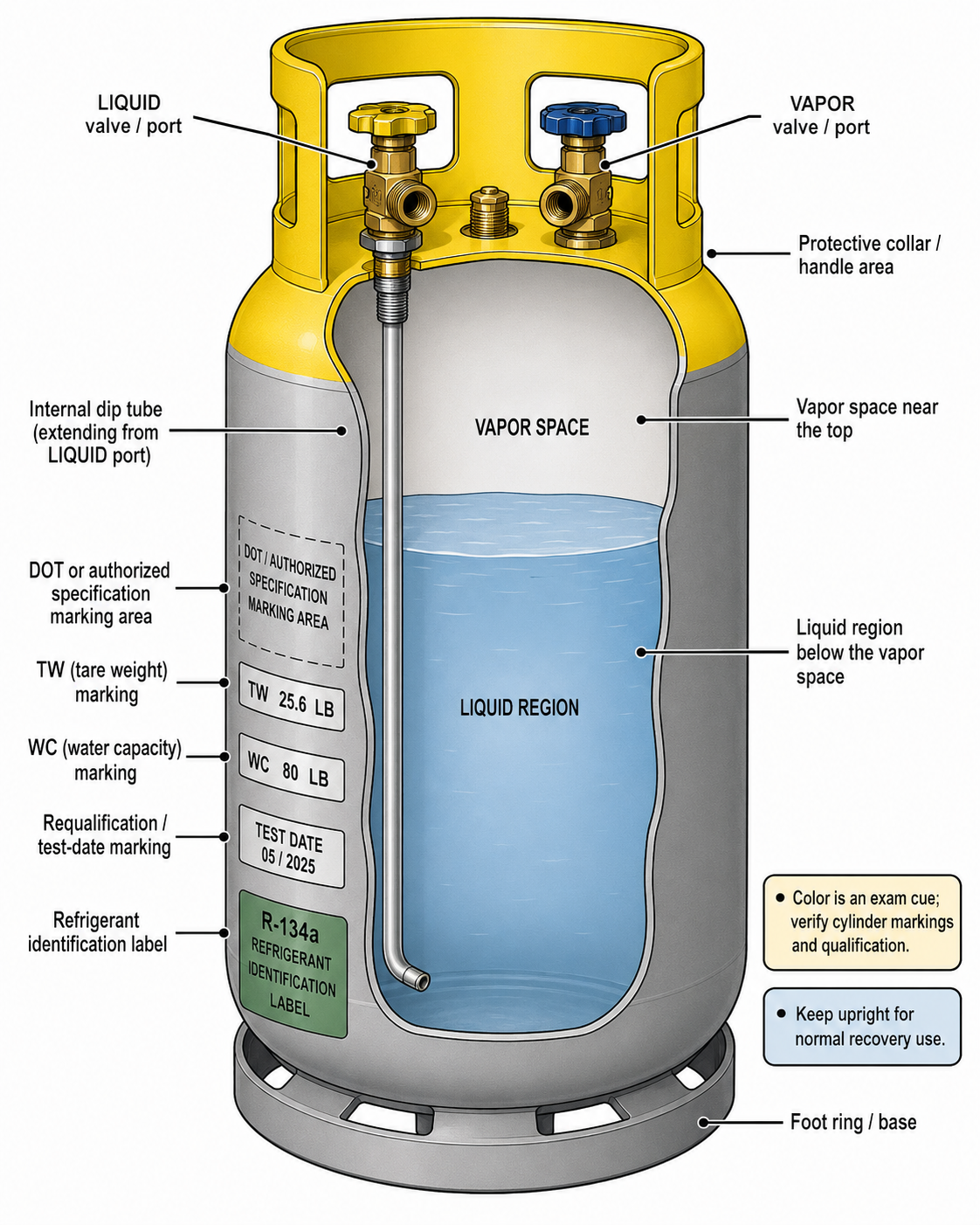
Figure 5.6.1 – Recovery cylinder identification and internal liquid/vapor port arrangement.
AI-generated instructional figure: It may contain visual inaccuracies. Use the accompanying lesson text and cited authoritative sources to verify technical and regulatory details.
Figure 5.6.2
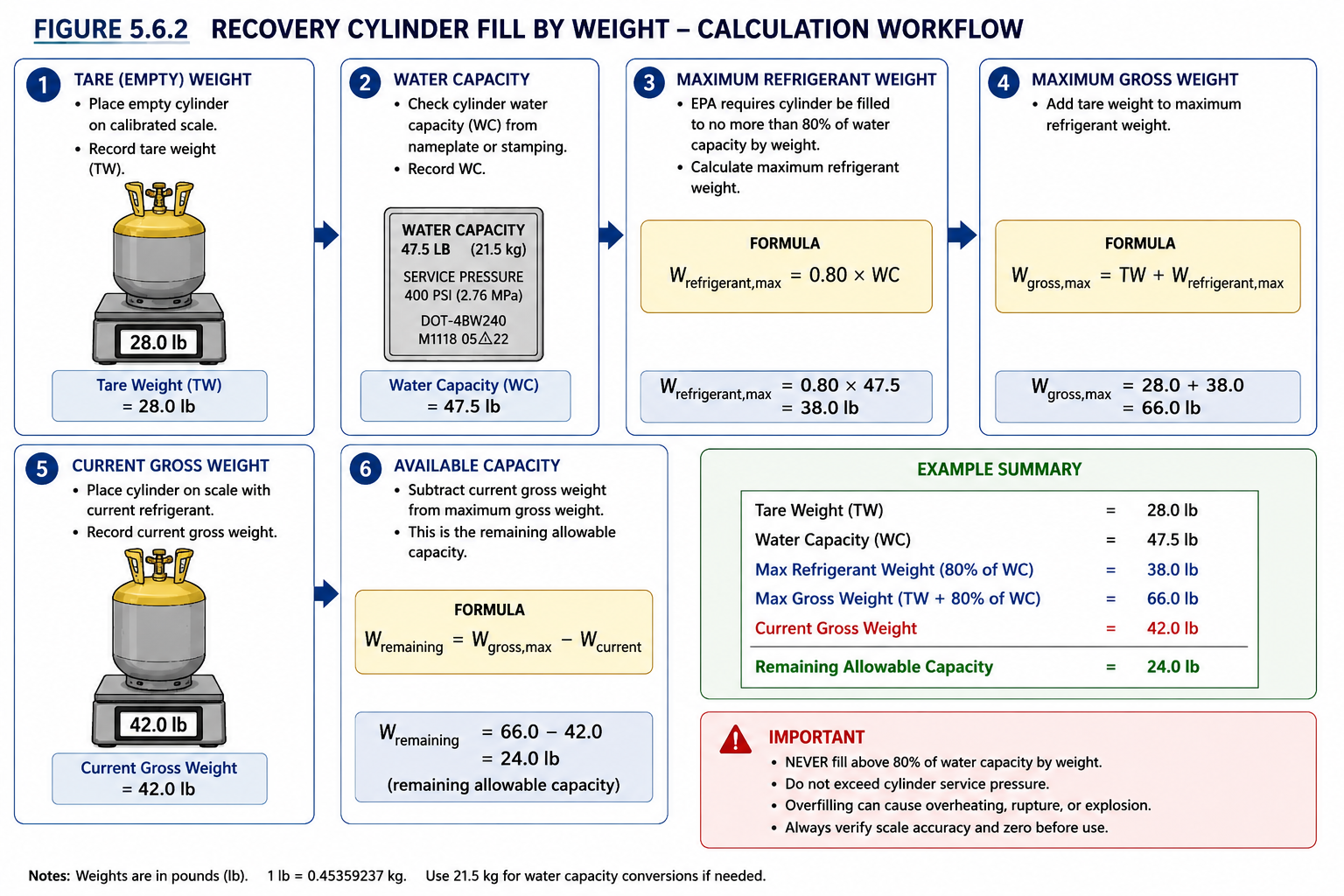
Figure 5.6.2 – Recovery cylinder fill and available-capacity calculation by weight.
AI-generated instructional figure: It may contain visual inaccuracies. Use the accompanying lesson text and cited authoritative sources to verify technical and regulatory details.
EPA 608 Exam Focus
What Students Must Remember
- A recovery cylinder is refillable.
- A disposable refrigerant cylinder is not refillable and must never be used for refrigerant recovery.
- EPA test topics identify the traditional recovery-cylinder color cue as yellow top / gray body.
- Color is only a cue; verify DOT / authorized markings and cylinder qualification.
- Typical recovery cylinders have liquid and vapor ports.
- The liquid port normally connects to an internal dip tube extending toward the bottom.
- The vapor port accesses the vapor space near the top when the cylinder is upright.
- Identify the ports from their markings, not only by valve-handle color.
- Keep the cylinder upright and stable during normal recovery use.
- EPA 608 test topics include the risk of filling a cylinder more than 80% full.
- Control cylinder fill by weight.
- Cylinder pressure is not a reliable measure of how full a two-phase refrigerant cylinder is.
- Know the difference between TW and WC.
- For the standard 80% training calculation:
- Maximum refrigerant weight = .
- Maximum gross weight = .
- Available capacity = maximum gross weight − current gross weight.
- The lower applicable manufacturer / DOT limit controls if it is more restrictive than the 80% training value.
- Use a scale throughout recovery.
- Do not bypass overfill protection.
- Inspect the cylinder for corrosion, dents, bulges, gouges, valve damage, and heat damage.
- A current requalification date does not make a visibly damaged cylinder acceptable.
- Typical recovered-refrigerant DOT 4-series recovery cylinders require five-year requalification.
- Verify DOT or other authorized cylinder markings before using the cylinder for transportation.
- Do not intentionally vent a damaged cylinder merely to discard it.
- Keep cylinders securely restrained during transport; normal HVAC practice is upright and secured.
- Never deliberately mix different known refrigerants in a clean recovery cylinder.
- Use a separate identified cylinder for unknown or contaminated refrigerant.
- Mark and manage mixed refrigerant as contaminated material rather than clean reusable refrigerant.
Cylinder Identification Memory Aid
RECOVERY CYLINDER
→ Refillable
→ Yellow top / gray body exam cue
→ Liquid + vapor ports
→ DOT / authorized markings
→ Requalification required
Fill Calculation Memory Aid
1. Read TW and WC

2. 0.80 × WC
   = maximum refrigerant weight

3. TW + maximum refrigerant weight
   = maximum gross weight

4. Maximum gross − current scale weight
   = available capacity
Port Memory Aid
LIQUID
→ dip tube
→ bottom of upright cylinder
VAPOR
→ upper vapor space
Typical Exam Question Patterns
Students may be asked to:
- Distinguish recovery and disposable cylinders.
- Identify why a disposable cylinder cannot be used for recovery.
- Recognize the yellow-top / gray-body recovery-cylinder cue.
- Identify the liquid and vapor ports.
- Identify which port uses a dip tube.
- Explain why a recovery cylinder is kept upright.
- Identify the danger of filling a cylinder above 80%.
- Calculate maximum refrigerant weight from WC.
- Calculate maximum gross cylinder weight from TW and WC.
- Calculate remaining available cylinder capacity.
- Explain why a scale is used rather than cylinder pressure.
- Identify an overfill-protection method.
- Identify cylinder defects that require removal from service.
- Recognize the five-year recovered-refrigerant recovery-cylinder requalification concept.
- Recognize DOT / authorized cylinder markings.
- Identify proper transport securement.
- Recognize why refrigerants must not be mixed in one clean recovery cylinder.
High-Priority Comparison Table
| Exam Clue | Correct Concept |
|---|---|
| Cylinder designed to receive recovered refrigerant | Refillable recovery cylinder |
| One-way refrigerant supply cylinder | Disposable / non-refillable |
| Refill disposable cylinder | Never |
| Yellow top and gray body | Traditional recovery-cylinder exam cue |
| Port with internal tube to bottom | Liquid port |
| Port opening to upper space | Vapor port |
| Determine how full cylinder is | Weigh it |
| Pressure reading alone | Does not determine fill mass |
| Maximum Section 608 training fill | Do not exceed 80% |
| 80% calculation base | WC, water capacity by weight |
| Empty-cylinder mass | TW, tare weight |
| Typical recovered-refrigerant DOT 4-series retest interval | 5 years |
| Severe corrosion / bulge / damage | Remove cylinder from service |
| Different known refrigerant already in cylinder | Do not mix |
| Transport | Secure against movement; upright is preferred HVAC practice |
Common Mistakes and Confusing Points
Mistake 1: Using an Empty Disposable Refrigerant Cylinder for Recovery
An empty disposable cylinder is still:
non-refillable
Use a refillable recovery cylinder.
Mistake 2: Assuming Yellow and Gray Color Alone Proves the Cylinder Is Approved
Verify:
- Authorized marking.
- Qualification date.
- Condition.
- Refrigerant compatibility.
Mistake 3: Confusing the Liquid and Vapor Ports
Correct relationship for an upright cylinder:
Liquid
→ dip tube
→ bottom
Vapor
→ upper vapor space
Mistake 4: Identifying Ports Only by Handle Color
Use the actual LIQUID and VAPOR markings.
Valve-handle colors are not universal across every manufacturer.
Mistake 5: Filling Until Cylinder Pressure “Looks High”
Pressure is not a reliable fill-mass indication for saturated refrigerant.
Use a scale.
Mistake 6: Calculating 80% of Tare Weight
Incorrect:
The standard training calculation uses:
Mistake 7: Forgetting to Add Tare Weight
gives the calculated maximum refrigerant mass, not the maximum gross scale reading.
For maximum gross weight:
Mistake 8: Treating 80% as Permission to Ignore a Lower Limit
A manufacturer or applicable DOT filling-density limit may be more restrictive.
Use the lower permitted value.
Mistake 9: Trusting an Automatic Shutoff Without Monitoring Weight
Overfill protection is a backup layer.
The technician should still know and monitor the allowable cylinder weight.
Mistake 10: Using a Cylinder With a Current Test Date but Severe Rust
Date and condition are independent checks.
A physically defective cylinder must be removed from service.
Mistake 11: Venting a Damaged Cylinder to Make It “Safe to Throw Away”
Do not intentionally release refrigerant.
Use an appropriate refrigerant-management and cylinder-disposal pathway.
Mistake 12: Assuming Every Compressed-Gas Cylinder Has a Five-Year Interval
The five-year rule here applies to the typical DOT 4-series recovered-refrigerant recovery-cylinder service.
Other cylinder services can have different intervals.
Mistake 13: Calling Upright Orientation the Only DOT-Permitted Highway Position
Current general Class 2 highway rules can permit properly restrained upright or horizontal cylinders.
For normal HVAC recovery-cylinder handling, upright securement remains the preferred teaching practice.
Mistake 14: Mixing Refrigerants to Save Cylinder Space
Cylinder space does not justify cross-contamination.
Keep different refrigerants separate.
Concept-Check Questions
Question 1
Which statement correctly distinguishes a refillable recovery cylinder from a disposable refrigerant cylinder?
A. A recovery cylinder is designed for repeated filling; a disposable cylinder must not be refilled.
B. A disposable cylinder can be refilled whenever its pressure is below 0 psig.
C. A recovery cylinder can only contain virgin refrigerant.
D. There is no functional difference if both cylinders are metal.
Question 2
On a typical upright two-port recovery cylinder, which port normally uses an internal dip tube extending toward the bottom?
A. Vapor port
B. Liquid port
C. Pressure-relief opening
D. Neither port
Question 3
A cylinder is marked and . Using the standard 80% training calculation, what is the maximum refrigerant weight?
A. 22.4 lb
B. 28.0 lb
C. 38.0 lb
D. 60.4 lb
Question 4
Using the same cylinder from Question 3, what is the maximum gross cylinder weight for the 80% training calculation?
A. 38.0 lb
B. 47.5 lb
C. 66.0 lb
D. 75.5 lb
Question 5
Why is a scale preferred over cylinder pressure for determining recovery-cylinder fill?
A. Cylinder pressure is mainly related to refrigerant temperature and saturation condition and does not directly indicate refrigerant mass.
B. A scale determines refrigerant chemical composition.
C. Cylinder pressure is always zero while liquid is present.
D. A scale automatically requalifies the cylinder.
Question 6
Which cylinder condition should cause the technician to remove the cylinder from service for evaluation?
A. Clearly readable refrigerant label
B. Severe corrosion or a visible bulge
C. Properly marked liquid and vapor valves
D. Stable placement on a scale
Question 7
For the typical DOT 4-series cylinder used to transport recovered refrigerant, what requalification interval is expected in EPA 608 preparation?
A. Every year
B. Every 2 years
C. Every 5 years
D. No periodic requalification is required
Question 8
A recovery cylinder already contains known R-22. What should be done before recovering R-410A?
A. Add the R-410A to the same cylinder if the total stays below 80%.
B. Vent the R-22 and reuse the cylinder immediately.
C. Use a separate properly prepared and identified cylinder for the R-410A.
D. Mix the refrigerants and relabel the mixture as reclaimed refrigerant.
Answers and detailed explanations will be provided in
5.12 - Answers and Explanations.md.
Section Summary
A recovery cylinder is a reusable pressure vessel designed to safely receive recovered refrigerant.
The first distinction is:
Recovery cylinder
→ refillable
Disposable refrigerant cylinder
→ non-refillable
→ never use for recovery
A typical upright recovery cylinder provides:
LIQUID port
→ internal dip tube
→ liquid near bottom
and:
VAPOR port
→ upper vapor space
For the standard Section 608 weight calculation:
The technician must:
- Weigh the cylinder.
- Stop before its allowable limit.
- Use overfill protection where provided.
- Inspect for damage and corrosion.
- Verify DOT / authorized markings.
- Verify current requalification.
- Secure the cylinder during transport.
- Keep refrigerants separated and correctly identified.
For the typical DOT 4-series recovered-refrigerant cylinder:
periodic requalification
→ 5 years
Finally:
Different refrigerants
→ different recovery cylinders
unless the material is intentionally being managed as a clearly identified contaminated-refrigerant stream under an appropriate receiving procedure.
The next section shifts from refrigerant storage to removal of air and moisture after recovery.
See Section 5.7 - Evacuation and Dehydration.
References
Current EPA Sources
-
U.S. Environmental Protection Agency, Section 608 Test Topics, accessed August 9, 2026.
-
U.S. Environmental Protection Agency, Stationary Refrigeration - Prohibition on Venting Refrigerants, accessed August 9, 2026.
-
U.S. Environmental Protection Agency, Recovering, Recycling, and Reclaiming of Refrigerants, accessed August 9, 2026.
Current DOT / PHMSA Sources
-
U.S. Department of Transportation, Pipeline and Hazardous Materials Safety Administration, Safety Advisory Notice — Unauthorized Cylinders Used by HVAC Personnel and Service Technicians, January 2025, accessed August 9, 2026.
-
Electronic Code of Federal Regulations, 49 CFR Part 177 — Carriage by Public Highway, especially § 177.840, accessed August 9, 2026.
-
U.S. Department of Transportation, Pipeline and Hazardous Materials Safety Administration, Interpretation No. 09-0177, October 13, 2009, DOT 4-Series Cylinders Used for Recovered / Reclaimed Refrigerant Gases, accessed August 9, 2026.
-
Electronic Code of Federal Regulations, 49 CFR Parts 171–180 — Hazardous Materials Regulations, accessed August 9, 2026.
Manufacturer Technical Reference
- CPS Products, AR2700 Series Operation Manual, recovery-tank parameter section. The manual defines maximum refrigerant weight for its tank setup as
WC × 0.80and requires reference to the tank-manufacturer information stamped on the cylinder collar.